
Understand the requirement
We discuss the business problem, intended users, existing systems, constraints and what a useful outcome would look like.
A good project should be understandable before it becomes complicated. We structure work around decisions, deliverables and visible progress.
We discuss the business problem, intended users, existing systems, constraints and what a useful outcome would look like.
We separate essential requirements from later possibilities, identify dependencies and clarify what is outside the project.
The proposal records the work, responsibilities, acceptance criteria, timeline assumptions and commercial terms.
Architecture, key workflows and interface decisions are made with the agreed requirements and constraints in view.
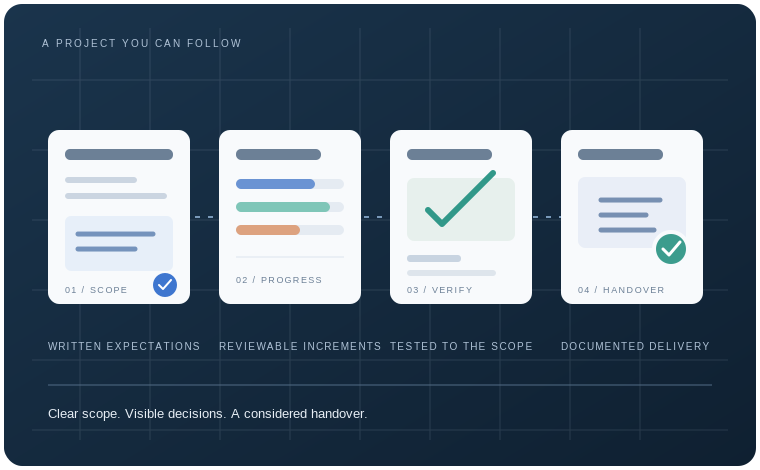
Work progresses in reviewable increments. Decisions, blockers and changes are discussed rather than hidden.
The agreed functionality is checked, defects are addressed and release readiness is reviewed according to the project.
Deployment activities, environments and access responsibilities are handled according to the approved plan.
The client receives the agreed deliverables, documentation, access and a record of remaining considerations.
Before work starts, the project plan identifies the agreed outcome, decision points and responsibilities. As implementation progresses, reviews are aligned to the scope and changes are recorded before they expand the work.
Scope changes are discussed and agreed before they become additional work. Third-party services and client-owned accounts remain visible dependencies.
Scope, deliverables and acceptance criteria are documented before implementation.
Where possible, production accounts and business-critical services remain under client ownership.
Technical notes and agreed operating information are part of responsible delivery.